Thursday, February 18, 2010

Sodium Carbonate, Hydrochloric Acid, and YOU


We made this white powdery stuff react with hydrochloric acid in a lab on Tuesday that made water, salt, and carbon dioxide gas. We calculated how much carbon dioxide gas and salt we would theoretically have if three grams of sodium carbonate was added, using the grams to moles to moles to grams conversion ratio thingy. Afterwards, we added them together, and there were bubbles! Then we boiled all the water away (with dangerous matches) and we had some salt left. :O

Kinda like this.

Friday, February 12, 2010

Magnesium Oxidatioooooooooooooooon


On Tuesday, we blew up the lab. :D

Just kidding, but we made some magnesium react with oxygen to form some white chalkey stuff called magnesium oxide! We didn't make it react really fast like the picture, but we stuffed some magnesium into a crucible and heated it up with a bunsen burner using matches (which is really really scary!) D:

Then afterwards we measured it and the magnesium oxide was supposed to weigh 0.60 grams when we put in 0.36 grams of magnesium. But we were wrong.

On a side note I want to make some ice cream and elephant toothpaste at the end of the year. :<

THE FIVE REACTIONS OF CHEMISTRY

HAR HAR HAR.

There are five different reaction types. They are:

1. Synthesis: Two elements combining into a compound.


2. Decomposition: A compound that reacts to break down into its basic elements.


3. Single Replacement: A compound and a pure element in the reactant side will switch atoms, in the pattern metal/H with metal/H or halogens with halogens. AB + X -> AX + B


4. Double Replacement: Two or more compounds in the reactant side swap ions, sometimes a precipitate is formed. AB + XY -> AY + XB


5. Combustion: A reaction where hydrogen, oxygen, and carbon are always part of the reactants and carbon dioxide, water, and heat are the products. The reaction is also an exothermic reaction.

Stoichiomewhawha

Stoichiometry is the process of making and balancing chemical equations.

Here we have a simple chemical reaction, the creation of hydrogen chloride from reacting hydrogen and chloride.


In the chemical reaction, one hydrogen atom and one chloride atom react to form ions, which attract each other to form the ionic molecule hydrogen chloride. But since there are two hydrogen atoms in hydrogen gas and two chlorine atoms in chlorine gas, the product of HCL must be doubled in order to be balanced. This is the science of stoichiometry.

Friday, January 29, 2010

Reactions!


Theresa is panicking nearby trying to finish her Japanese project. :D So excuse me if this post happens to be filled with nonsensical nonsense.

Chemical reactions are basically the rearrangement of atoms and molecules into new compounds. Heat, bubbles, color changes, property changes, and precipitates (insoluble solild) are all signs of chemical reactions. Chemical reactions happen all around us, even inside our bodies when we breath, eat, and do anything.

Balancing these chemical reactions to have the same amount of atoms on both sides is kind of hard. D: It's kind of like algebra... kinda.

Also I got a 104% on my Solutions and pH test. Yay! :D

Thursday, January 21, 2010

pH and PMSing


Potential Hydrogen
and Periodic Male Stupidity.

Although they sound similar, they are really two very different things.

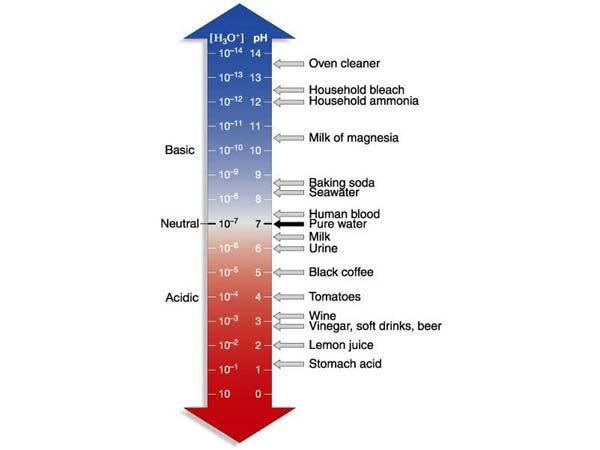
pH is a measure of how many [H+] ions are present in a solution. Its counterpart is the [OH-] ion, or the hydroxide ion. Hydrogen ions are generated when acids are dissolved in water, separating its Hydrogens from the anion. Once inside the solution, the hydrogen ions will react with water molecules to form Hydronium ions (H3O).

If a strong base is dumped into water instead, the [OH-] ions that separate will react with [H+] ions present in the water to form H2O molecules, thereby increasing the pH of the solution.

Making Solutions

In chemistry, we're learning about solutions. In a lab last week we made solutions of some liquids and solids. We calculated exactly how many grams of cobalt chloride we should add to a solution of water. After dissolving it in water, we took it to a spectrometer where we measured how much light it absorbed to determine how accurate our measurements were. Our group turned out to be off in the first measurement, but right-on in the second solution measurement of potassium permanganate.

It goes to show how much accuracy can affect science!