Friday, April 16, 2010

iProposeWe


How to Make Glow-in-the-Dark Slime
How to Make Glow-in-the-Dark Slime (with similar instructions)

Materials needed:
  • Elmer's glue gel or 4% polyvinyl alcohol solution
  • 4% (saturated) borax solution
  • phosphorescent zinc sulfide (ZnS) or glowing paint
  • measuring cups/spoons
  • bowl or ziploc baggie
  • spoon (optional)

    Procedure:
    1. Make a 4% polyvinyl alcohol solution. Another substitution is one part regular school glue, mixed with three parts water.
    2. Mix zinc sulfide into the polyvinyl alcohol solution (approx. 0.6ml ZnS per 30ml of solution). Or, use glow-in-the-dark paint found at arts and crafts stores.
    3. Make a 4% saturated borax solution.
    4. Mix 3 parts of the PVA or glue gel solution with 1 part borax solution, and slowly mix inside a sealed baggie with a spoon or with your hands.

    Safety Precautions:
  • Don't eat or inhale the slime or any of the ingredients
  • Always wash your hands after using the slime

    Scientific Principles:
    1. Slime is made up of polymers.
    2. The borax acts to connect the glue molecules, creating chemical polymers, which makes slime.
    3. Zinc sulfide has a special physical chemical property of glowing in the dark.
  • Thursday, April 1, 2010

    Measuring Air


    it would make sense that air weighs nothing... but apparently it does!

    the molar mass of air, as we discovered this week, is about 30 grams per mole of air. so air has weight. whaaat.

    we made a vacuum in a syringe (which was really hard to pull out D:) and then weighed it on a scale which kept going up and down :C. Then we put the air back in the syringe and weight it again. then we used lots of equations and stuff and calculated the number of moles of air in the syringe and how much it weighed. that's how we got the molar mass of air. yay! we kinda solved it like this but i think it was less complicated.

    Friday, March 26, 2010

    Japantown Field Trip


    whee.

    today we went to Japantown (or 日本町). we did this scavenger hunt with lots of first year Japanese students. We walked around all day today and looked at lots of different cultural items in Japan. We had lunch at some place called Sapporo-ya and they had some really yummy ramen. Then we went and got lots of crepes for dessert. I got a chocolate gelato crepe. :3 Theresa had some really expensive ice cream もち.

    I wanted to go to the Pikapika photo booth stalls but we didn't have enough time to go, and we had to go back at like 1:30 (which is super early!) and now because of that I'm sitting here typing up this blog about Nihon Machi. :o

    Wednesday, March 24, 2010

    David Webb, The Vacuum Master


    There was this guest presenter named David Webb who came on Tuesday to show us some really cool demos using air pressure. He had this vacuum chamber which used a pump to pump out air using air pressure (not sucking!) and really funny things would happen to things inside the airless chamber (vacuum)!

    He did lots of fun stuff like putting a feather and a metal washer into the vacuum and showing us how they fell at the same time in it (because the feather doesn't encounter wind resistance). Then he magically made marshmallows bigger, like this!

    It was pretty fun that day. Although I have to wonder what the American Vacuum Society is o_o.

    Friday, March 19, 2010

    Gay-Lussac's Law


    This guy discovered the law that air pressure increases when temperature increases. We did this lab on Thursday when we dumped a test tube full of air and a black pressure gauge into increasingly hotter liquid water, and then hot oil @_@

    Then we made this graph and we found out the absolute zero temperature is around -300 degrees celsius! that's super cooooooooold.

    Thursday, March 11, 2010

    MC Delta T


    And it's M, C, Delta T!

    That's calorimetry dawg.

    MC Delta T is a formula that calculates the specific heat of a substance. It's used in calorimetry.

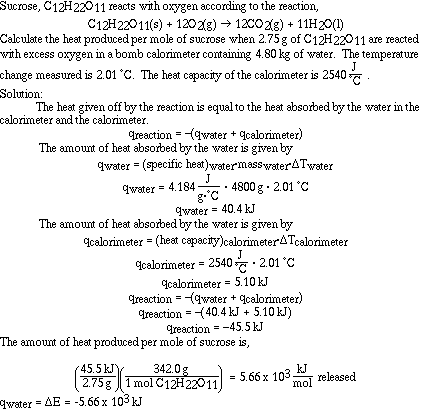
    Q = MCDeltaT, where Q is the heat energy in joules/calories, M is the mass in grams, C is the specific heat in calories or joules per Celsius gram, and Delta T is the change in temperature of the substance.

    Here's a calorimetry sample problem.

    Elephant toothpaste, desu


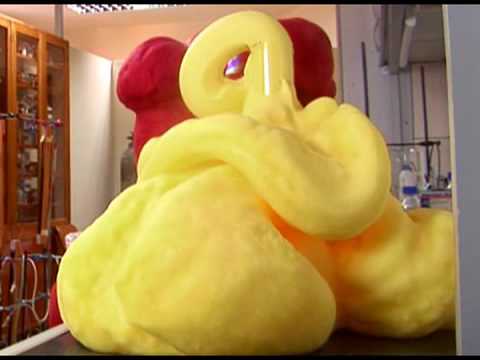
    Today Mr. Olson did the elephant toothpaste experiment. :3

    He put some hydrogen peroxide and dishwashing soap together, and he said it was supposed to react really slowly and finish reacting after a couple days. But when he put a catalyst in, potassium iodide, the solution suddenly turned yellow, and bubbled right over the cylinder :o

    It was really hot and steamy yellow puffy stuff!

    Like this!