Friday, January 29, 2010

Reactions!


Theresa is panicking nearby trying to finish her Japanese project. :D So excuse me if this post happens to be filled with nonsensical nonsense.

Chemical reactions are basically the rearrangement of atoms and molecules into new compounds. Heat, bubbles, color changes, property changes, and precipitates (insoluble solild) are all signs of chemical reactions. Chemical reactions happen all around us, even inside our bodies when we breath, eat, and do anything.

Balancing these chemical reactions to have the same amount of atoms on both sides is kind of hard. D: It's kind of like algebra... kinda.

Also I got a 104% on my Solutions and pH test. Yay! :D

Thursday, January 21, 2010

pH and PMSing


Potential Hydrogen
and Periodic Male Stupidity.

Although they sound similar, they are really two very different things.

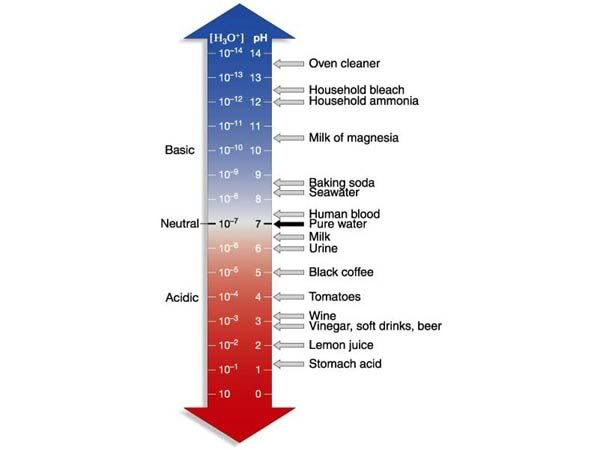
pH is a measure of how many [H+] ions are present in a solution. Its counterpart is the [OH-] ion, or the hydroxide ion. Hydrogen ions are generated when acids are dissolved in water, separating its Hydrogens from the anion. Once inside the solution, the hydrogen ions will react with water molecules to form Hydronium ions (H3O).

If a strong base is dumped into water instead, the [OH-] ions that separate will react with [H+] ions present in the water to form H2O molecules, thereby increasing the pH of the solution.

Making Solutions

In chemistry, we're learning about solutions. In a lab last week we made solutions of some liquids and solids. We calculated exactly how many grams of cobalt chloride we should add to a solution of water. After dissolving it in water, we took it to a spectrometer where we measured how much light it absorbed to determine how accurate our measurements were. Our group turned out to be off in the first measurement, but right-on in the second solution measurement of potassium permanganate.

It goes to show how much accuracy can affect science!

Thursday, January 7, 2010

Like Dissolves Like

Dissolving is the process where a substance (also called the solute) is broken down in another substance (called the solvent). It forms a homogeneous solution which will never settle. In the case of water, a polar solvent (the universal solvent), it can dissolve other polar compounds and ionic compounds. Likewise, nonpolar solvents can dissolve nonpolar solutes. This principle is called 'like dissolves like', where similar compounds will dissolve other similar compounds.

Below, salt, an ionic solute, is being dissolved by water, the polar solvent.


Alka-seltzer is a solute which also dissolves in water.

Thursday, December 10, 2009

It's a MOOOOOOOOOOOOOOOOOOOOOLE


6.02 x 10^23.

A big number it is. 602,000,000,000,000,000,000,000.
Was thought up by a guy named Amadeo Avogadro. This ug-- I mean, lovely old guy.


It's a big unit of measure that's used to tell how many atoms are in a certain amount of whatever. If you had 12.01 grams of Carbon, you would have 6.02 x 10^23 atoms of Carbon, or a mole of carbon atoms. (By the way, this is an example of molar mass, which can be found on the periodic table).

A mole is biiiig. A mole of papers stacked up could travel to the Moon and back... 80 billion times.

Did I mention it was really big?

And then in class on Thursday, there were tons of hole punches on the floor (although I don't think there were a mole of them!) And we had to calculate the mass in grams of .047 of a mole of atoms in them, and our table won! Theresa, Krystina, and Marcia are hella awesome. :3

Also, Mr. Olson made a video that talks about moles!

Wednesday, December 2, 2009

Polarity

Attract and repel each other like water and oil ;D

Some molecules are polar when the atoms are bonded together. This is due to a difference in the electronegativity levels. An EN difference from about 0.5 to 1.7 will make a molecule polar covalently bonded.

Polar bonds happen when there is an EN difference between 0.5 to 1.7. One atom pulls electrons closer to it than the other atom, which makes them orbit around that atom more often. This creates two poles, one slightly positive and one slightly negative. In many cases, the existence of these poles (dipoles) makes the molecule a polar (dipole) molecule. In the example of water below, the oxygen atom (red) is the negative pole; the hydrogen atoms (white) are centers of positive charge. Because a oxygen to hydrogen bond creates a polar bond, the oxygen attracts electrons to it more and creates a center of negative charge.


In some other cases, two polar bonds can cancel each other. Take the example of carbon dioxide, shown below in the right.


Because both C-O bonds are polar, they create centers of positive and negative charge. However, since the molecule's structure is linear, the bonds are at direct opposites of each other. The attractive forces of each in either direction cancel each other's out. The molecule, therefore, has no center of charge, and is not a polar molecule. To the right, CH2O has a polar bond. Since it is not canceled out by an opposite force, it is a polar molecule overall.

Monday, November 30, 2009

Somries


Did you know two molecules can have the same chemical formula but different structures?

These are called isomers. They're made of the same number and kind of atoms, but arranged in a different shape such that it changes the physical properties of the substance. These can be seen most commonly in hydrocarbons (organic molecules) which contain long carbon chains. These carbon chains can be broken down so that they branch off a single main carbon chain, which changes its chemical properties.

All hydrocarbons including and after butane have at least one isomer.

n-butane is a straight carbon chain butane molecule, while isobutane branches off, seen above.